Category
Category: For Christian students and faculty
What difference does being a Christian make to my university work? What should Christian students and faculty pray? What books should I read to help me think through my discipline from a Christian perspective?
Here you will find posts to help you to think through these questions and more.
-
How can I justify spending so much of my life on academic research with all the problems in the world?
I work in an obscure corner of some unfashionable discipline. My ideas will never change the world. How can I justify spending so much of my life on academic research? How does it serve the kingdom of God? These questions read like a typical diary entry from my time as a doctoral candidate. I still struggle

-
Art, sense and concept
“we comprehend the world aesthetically, in ways that cannot be derived from other forms of knowledge and artifice.” (Paul Crowther, “Art’s making: why aesthetics matters to art history,” unpublished manuscript) it is the integral fusion of the sensuous and the conceptual which enables art to express something of the depth and richness of body-hold in
-
The good, the true, and the beautiful in arguments
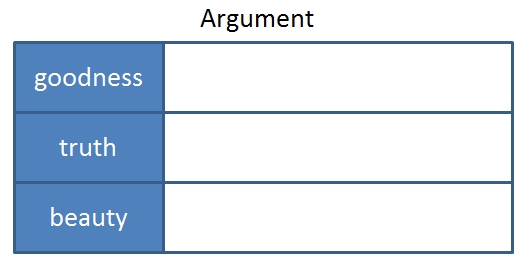
In a post from 2009 over at Between the Times, Bruce Ashford quotes Augustine on Psalm 26, encouraging the Christian to see the God of creation behind the wonders of creation. The pleasure we experience in seeing a beautiful cathedral reminds us to admire the church’s architect. How much more should viewing the universe’s infinite
-
What’s the stumbling block for our colleagues: untruth or ugliness?
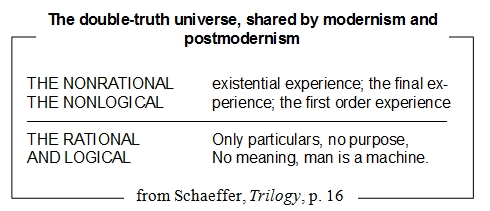
Why do highly educated people–I’m thinking especially of our university colleagues–reject the claims of Jesus Christ? Many people better qualified than I am have written at great length on the subject, but let me offer one thought here. At the risk of oversimplification, I’ll sum up my point in this shorthand way: The main problem
-
Shalom (2 of 2). Building human culture: our task for today, our joy for eternity
In a previous post I explored how shalom shapes what we think the task of academy should be, and how we understand our place in it. I now want to widen the focus a little and think about shalom as a paradigm of culture-building that bridges this world and the next. This second way in

-
Christian academia and the peace (שׁלום, shalom) of Jeremiah (1 of 2)
In a previous post I commented on the importance Sir Donald Hay gives to the biblical notion of shalom in his understanding of what it means to be a Christian academic. In the present post I want to think a little more carefully about what shalom is and how it is an important idea of

-
There is more to Sabbath than not working: Sabbath rest as a political and subversive practice
A recent email exchange put me in mind of the importance of taking rest from work, and of how this rest can be a powerful political statement. In my experience this is a particular challenge for academics, who have anything but a 9 to 5 job. I try to tease out the political implications of

-
Seminar. Storyboarding your Discipline: A Tool for Christian Students and Academics
In this seminar I want to explore one way that Christian academics can understand the secular disciplines in which we work. I will begin by discussing two different ways in which we can understand the Christian faith and the way it shapes our work, before moving on to discuss a tool to help us think

-
The joys of being a paleolibricist
Do you need a mental detox from the glucose rush of today’s self-help inspired “how to…” Christian books? Longing for something meaty, a nutrition technology that releases its mental nutrients gradually and satisfies for longer? Then C. S. Lewis has just the diet for you. You need to become a paleolibricist! First of all, paleolibricism is

-
Do you want to be subversively counter-cultural? Then read old books
In this gem of an exchange, James Houston talks about his desire “in the middle years of life” to be counter-cultural, and the way in which spiritual classics allow us to enter the culture of another period and see our own culture somewhat from the outside: If you want to think more about this issue,