Category
Category: For Christian students and faculty
What difference does being a Christian make to my university work? What should Christian students and faculty pray? What books should I read to help me think through my discipline from a Christian perspective?
Here you will find posts to help you to think through these questions and more.
-
Bible and culture 2: The Revelation 7 Paradigm
In this second post in the series on the Bible and culture I continue to prepare the ground for a series of reflections about bringing Bible and culture into conversation. Having sketched out the importance of eschatological realism, I now want to explore how the depiction of the new heavens and new earth in the

-
Bible and culture 1: Eschatological realism and “the way things are” for the Bible.
This is the first in a new series of posts exploring how to understand both the Bible and contemporary culture in a way that help us bring them into meaningful and rigorous conversation. This first post addresses what it means to talk about “the way things are” from a biblical perspective. For the Christian,

-
Let’s read Pascal (4): is my opponent mistaken, or incomplete?
9 When we wish to correct with advantage, and to show another that he errs, we must notice from what side he views the matter, for on that side it is usually true, and admit that truth to him, but reveal to him the side on which it is false. He is satisfied with that,

-
The Disappearance of Moral Knowledge (Introduction and Preface)
Dallas Willard was one of the most intriguing Christian philosophers of the last several decades. He was a first-rate philosopher who did his initial academic work on the thought of Edmund Husserl, and his first major academic work was Logic and the Objectivity of Knowledge: A Study in Husserl’s Philosophy (1984). He would go on

-
Let’s read Pascal (2): intuitive and mathematical thinking
I said in a previous post that I was starting to re-read Pascal’s Pensées, and I invited you to grab a copy and read along. I originally thought that I could go at the pace of one section per day, but after starting with section one yesterday I find I’ve got a pile of notes
-
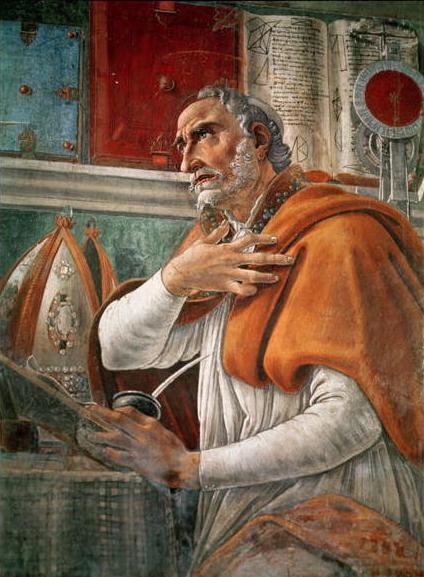
Augustine, Education, and The Overcoming of Paganism
Christians have long wrestled with how best to think about the relationship between Christianity and culture. Many of us first thought seriously through this issue when we read H. Richard Niebuhr’s classic, Christ and Culture (first published in 1951). In doing some writing on Augustine, I discovered in my notes a comment by Serge Lancel on
-
Turning George Herbert’s ‘The Elixir’ into an academic prayer
As well as writing my own academic prayers I love the economy and precision of phrase in good poetry and find that it makes great prayer material as well. One of my favourite poems-cum-prayers is The Elixir, by George Herbert. It captures beautifully the spirit of Colossians 3:17 and 23-4: And whatever you do, in word

-
The academic life and paying taxes to Caesar
In this post I want to think about how academic study fits in with the rest of our lives. I will suggest two defective models, and propose a more adequate model. There is a very powerful contrast in the film Chariots of Fire that brings out the dangers of an defective model of any vocation, and

-
Temptations of the academic life (4): cynicism
A few years ago I had the privilege of spending a week with a group of Christian painters and sculptors. God showed me something important through being with them. He showed me just how cynical I have become. There was a lot of talk among these artists about joy in creation, about creativity, and about an

-
Temptations of the academic life (3): Idolatry of work
One of the main challenges we face in the academic life is not to make an idol out of our work or status. I gain great satisfaction from my work and enjoy it intensely, but I know that the moment it becomes the place where I run for my consolation or for affirmation, instead of being able