Category
Category: For Christian students and faculty
What difference does being a Christian make to my university work? What should Christian students and faculty pray? What books should I read to help me think through my discipline from a Christian perspective?
Here you will find posts to help you to think through these questions and more.
-
Five reasons why we need a biblical cultural theory today
Perhaps we should blame it on the Jordan Peterson phenomenon. Or maybe it’s a symptom of the increasingly tribalized culture wars echoing noisily through the Twittersphere. However we got here, we have to admit that “critical theory” and “cultural Marxism” have become a thing for Christians today. What is at stake for Christians in grappling

-
The basis of a healthy society: the social contract, promise-keeping and the Golden Rule
To adapt a popular meme from the Lord of the Rings trilogy, “One does not simply… rewrite the social contract”. It isn’t something we can change at will. It doesn’t drop from the sky fully formed. And, as we know, it wasn’t simply “written” in the first place. The codified aspects of the social contract—the

-
Christianity and the social contract: preliminary reflections
The paper below was prepared for the Jubilee Centre taskforce on the role of the state in the post COVID-19 world. Its intention is to provide a brief overview of classic social contract theory and identify some ways in which the social contract paradigm relates to Christian theology. Enjoy! Christianity and the social contract “Contemporary

-
Sir Donald Hay on Being a Christian Academic
Over on the DCM at Oxford blog there is an excellent article entitled ‘On Being a Christian Academic‘, written by Donald Hay, retired professor of Economics and fellow of Jesus College, Oxford, former acting Pro Vice Chancellor for Planning and Resources for the university, and founder of the Developing a Christian Mind programme at Oxford. Hay says

-
Do you know what is most shaping your desires and beliefs? This quick exercise can help you find out… and change it
In a recent post we briefly discussed the way in which the media we consume shapes to a significant extent what we desire, what we think, and how we feel about ourselves and our society. The issue merits further reflection for Christians studying or working in an academic setting. Christian academics are, so to speak, professional consumers and interpreters

-
Be careful what you pray for, Christian scholar
In our prayers as Christian scholars we will often find ourselves asking for wisdom, knowledge, depth of insight, and understanding. But do we realise that with the granting of these gifts comes an increased responsibility? Now let me say right at the beginning of this post that this truth is not unique to gifts of the mind.

-
The academic prayer life: how to be more colourful and adventurous than just “make me successful”
As with all of our prayers (or mine at least) there is a tendency, when we pray about our work, simply to spiritualise the values of the culture around us and pray for what everyone in our lab or department wants, be they Christian or not. This usually means praying for some combination of success,
-
Developing a Christian Approach to Your Academic Discipline: The Map and the Mirror
In this post I want to explore one way that Christian academics can get to grips with the secular disciplines in which we work. I will begin by discussing two different ways in which we can understand the Christian faith and the way it shapes our work, before moving on to discuss a tool to help

-
Tim Keller shows how overwork and underwork are symptoms of the same disease, and Francis Schaeffer helps us find the right balance between optimism and pessimism
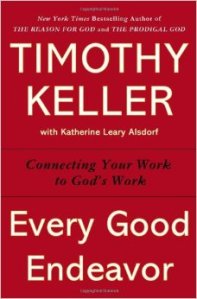
In this brief interview between Tim Keller and Matt Smethurst about Keller’s book Every Good Endeavour: Connecting your Work to God’s Work, the point that I found particularly helpful was Keller’s diagnosis of how “the counternarrative of the gospel addresses our propensity to idolize or demonize, to overwork or underwork”. This repeats a characteristic move of Keller’s, showing
-
Christian Academics: Is your understanding of your faith three thousand miles wide and half an inch deep?
In a previous post I talked about the difference between intensive and extensive reading, and the importance of finding a balance between the two. The same terms can be applied to our faith. It is easy to live an exclusively extensive Christianity today: our coverage may be wide, but we don’t let God’s word sink