Category
Author: Chris Watkin
-
Biola Center for Christian Thought: Plantinga and Wolterstorff on the academic totem pole
Biola University’s Centre for Christian Thought is a great resource for Christian postgrads and academics who want to deepen their thinking about how to serve Christ in secular academia. Here’s a taster to whet your appetite: Nicholas Wolterstorff and Alvin Plantinga on how to deal with the academic totem pole. Plantinga’s insight is spot on

-
Video talk: Thinking Through Creation
How does the fact that God is both absolute and personal shape a Christian view of reality and culture? How does the biblical truth that human beings are made in the image of God help Christians to avoid two opposite dangers in relation to human identity? How does God’s command to Adam and Eve to

-
Video talk: Introduction to Thinking Through the Bible
This is the first in a series of four talks exploring how the biblical turning points of creation, fall and redemption can 1) shape fresh and faithful interventions into some of the most important social, cultural, political and intellectual debates of our day, and 2) help Christian students to understand and engage with their academic

-
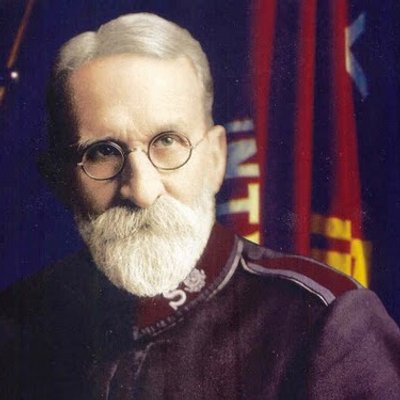
A Prayer of Samuel Logan Brengle
Keep me, O Lord, from waxing mentally and spiritually dull and stupid. Help me to keep the physical, mental and spiritual fibre of the athlete, of the man who denies himself daily and takes up his cross and follows Thee. Give me good success in my work, but hide pride from me. Save me from
-
Bible and culture 3: Universal Truth, Specific Cultures, and the Incarnation
In this third post in the Bible and culture series I continue to take an eschatologically realist approach to Revelation 7. Specifically, I bring the remarkable claims of Christ’s incarnation alongside Revelation 7 in order to show that biblcial truth is not a-cultural, monocultural or even multicultural, but transcultural. We moderns tend to think of

-
Bible and culture 2: The Revelation 7 Paradigm
In this second post in the series on the Bible and culture I continue to prepare the ground for a series of reflections about bringing Bible and culture into conversation. Having sketched out the importance of eschatological realism, I now want to explore how the depiction of the new heavens and new earth in the

-
Bible and culture 1: Eschatological realism and “the way things are” for the Bible.
This is the first in a new series of posts exploring how to understand both the Bible and contemporary culture in a way that help us bring them into meaningful and rigorous conversation. This first post addresses what it means to talk about “the way things are” from a biblical perspective. For the Christian,

-
Let’s read Pascal (4): is my opponent mistaken, or incomplete?
9 When we wish to correct with advantage, and to show another that he errs, we must notice from what side he views the matter, for on that side it is usually true, and admit that truth to him, but reveal to him the side on which it is false. He is satisfied with that,

-
Let’s read Pascal (2): intuitive and mathematical thinking
I said in a previous post that I was starting to re-read Pascal’s Pensées, and I invited you to grab a copy and read along. I originally thought that I could go at the pace of one section per day, but after starting with section one yesterday I find I’ve got a pile of notes
-
Turning George Herbert’s ‘The Elixir’ into an academic prayer
As well as writing my own academic prayers I love the economy and precision of phrase in good poetry and find that it makes great prayer material as well. One of my favourite poems-cum-prayers is The Elixir, by George Herbert. It captures beautifully the spirit of Colossians 3:17 and 23-4: And whatever you do, in word
